Folding Tables vs Fixed Tables: Which is Best for Your Business?
If you’ve ever had to drag a solid oak table across a room while a group of expectant guests watches you sweat, you already know that commercial furniture is about way more than just picking a nice colour. It dictates how your entire day runs.
When you’re setting up a space, whether it’s a café, a local community hall, a hotel function room, or a corporate workspace, you hit a massive fork in the road almost immediately: Do you go for folding tables or stick with fixed ones?
It sounds like a simple choice, but getting it wrong is a recipe for daily operational headaches. Let’s look at the honest, unvarnished reality of both options so you can figure out what actually makes sense for your floor plan.
The Case for Folding Tables (The Shape-Shifters)
Let’s bust a myth right out of the gate: we aren't talking about the flimsy, rattling card tables you remember from school exams. Modern, commercial-grade folding tables are tough as nails. But their real superpower is agility.
Why people love them:
Total floor freedom: You can host a corporate seminar at 9 AM, flip the room for a sit-down lunch at 1 PM, and clear the decks entirely for an evening yoga class. If your space needs to wear multiple hats, folding tables are non-negotiable.
Out of sight, out of mind: When you don’t need them, they vanish. Stack them onto a proper trolley, wheel them into a cupboard, and suddenly you’ve reclaimed your entire floor.
Save your staff's backs: High-quality lightweight wood or high-density plastic models mean your team can flip a room in minutes without needing a sports massage afterward.
The trade-offs:
The labour cost: They might be easy to move, but someone still has to move them. If you’re changing layouts twice a day, that’s labour hours you have to pay for.
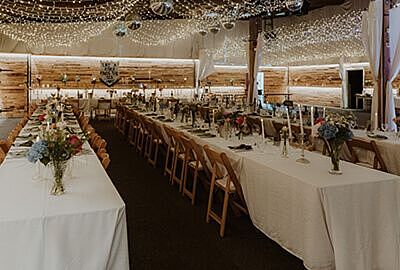
The look: While modern designs look great, budget folding tables can sometimes look a bit sterile. If you’re hosting high-end dinners or weddings, you’ll definitely need to budget for good linens or tablecloths to dress them up.
The Case for Fixed Tables (The Anchors)
Fixed, static tables are the heavy hitters. Think of substantial wooden restaurant tables, cast-iron pub bases, or permanent, gleaming boardroom setups. They don't move, and that's exactly the point.
Why people love them:
That premium feel: There’s a psychological comfort to a heavy table. It feels permanent. If you want customers to settle in, order another round of drinks, and relax over a long meal, a sturdy, immovable table sets that exact mood.
Zero daily hassle: You put them down once, and you’re done. There are no locking mechanisms to check, no hinges to pinch fingers, and absolutely no setup time before you open the doors every morning.
They last forever: With zero moving parts, there’s nothing to wear out or break over time. A solid static table can take a decade of hard commercial battering and just look better for it.
The trade-offs:
Zero flexibility: If a party of twelve walks into your café and wants to sit together, or if a band needs space to set up, fixed tables turn into a massive obstacle course. They are heavy, awkward, and box you into one layout.
Nightly cleaning pains: Trying to sweep, mop, or vacuum around dozens of heavy table legs at 11 PM is a chore. It slows down the nightly pack-up compared to a completely cleared floor.
The Verdict: Which One Wins?
Instead of looking at the tables, look at how you actually make your money.
Go with folding tables if your business relies on events, conferences, community groups, or multi-use spaces. If adaptability is what keeps your doors open, go flexible.
Go with fixed tables if you run a traditional dining spot, a cozy pub, a high-end coffee shop, or a dedicated workspace. If your layout stays the same from January to December, prioritise the comfort and sturdiness of static furniture.
The insider secret? A hybrid layout.
You don't actually have to choose just one. Plenty of smart operators use fixed tables for their main floor to keep the vibe right, but keep a stack of premium folding tables tucked away in a storeroom. That way, when the weekend rush hits or someone books a private party, they can scale up their seating in five minutes flat.
Prefer to have an AI Summary?
Chat GPT
Perplexity AI
Google Gemini AI


