
Wooden vs Plastic Folding Chairs: Which is More Durable?
If you run an event venue, a marquee hire company, or you’re just the person in charge of upgrading the local village hall furniture, you know the score. Folding chairs take an absolute beating.
They get thrown into the back of vans, dropped on concrete, left out in the drizzle, and sat on by people of all shapes and sizes. You don’t just need them to look decent, you need them to survive.
So, if you’re staring at your budget trying to decide between wood and plastic, which one is actually going to stand the test of time?
Let’s look at how they hold up in the real world, without the glossy brochure talk.
Plastic Folding Chairs: The Unkillable Workhorses
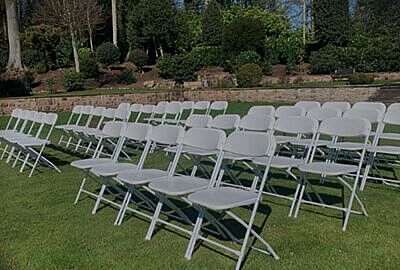
When we say plastic, we’re not talking about those flimsy white garden chairs that buckle the moment someone leans back. Commercial plastic folding chairs are usually made from high-density polyethylene (HDPE) bolted to a steel frame.
Why they last:
They don’t care about the weather: If a sudden downpour hits your outdoor event, plastic doesn't care. It won't absorb water, warp, or rot. You can stack them damp if you're in a rush, and they won't ruin.
They take a beating: Plastic has a bit of give. If a chair slips out of a stack and hits the ground, it bounces. It doesn't splinter or shatter.
Zero upkeep: You don't need to sand them, paint them, or varnish them. A quick wipe down, or a blast with a pressure washer if they’re covered in mud, and they’re ready for the next job.
The catch:
The plastic itself is tough, but the weak point is usually the steel frame. Over time, the protective powder coating gets scratched from being stacked. If they’re stored in a damp shed, those scratches will eventually turn into rust.
Wooden Folding Chairs: The Tough Classics
Wooden folding chairs, usually beechwood, are the staple of weddings and high-end corporate gigs. They look brilliant, but because wood is a living material, its durability is a completely different ball game.
Why they last:
Solid as a rock: A good wooden chair feels rigid. There’s no flex or wobble when you sit in it, which gives guests a lot of confidence.
You can fix them: This is where wood beats plastic every day of the week. If a plastic chair cracks, it’s going in the skip. If a wooden chair gets scuffed, scratched, or chipped, you can sand it down, touch up the paint or varnish, and it looks brand new again.
Strong joints: They’re held together with heavy-duty rivets and brackets. If something loosens up after a busy summer season, you can usually just tighten it back up.
The catch:
Wood hates moisture. Leave them out in a wet field for a weekend, or stack them away while they’re still damp, and you’re asking for trouble. The wood will swell, the joints can weaken, and the paint will start to flake off. They require a bit of looking after.
The Verdict: Which Actually Wins?
It honestly depends on what kind of punishment you’re planning to put them through.
Go for plastic if: You do a lot of outdoor events, your storage isn't perfectly dry, or you don't have the staff time to spend maintaining furniture. Plastic is pure utility. It’s a "set and forget" option that handles rough, fast pack-downs without showing the scars.
Go for wood if: You need a premium look but still want something structurally robust. If you treat them well, keep them dry, and don’t mind doing a bit of cosmetic maintenance in the off-season, a high-quality wooden chair can easily outlast a plastic one.
Still weighing up your options? Take a look at our heavy-duty Wooden Folding Chairs and ultra-reliable Plastic Folding Chairs to see what works best for your setup.
Prefer to have an AI Summary?
Chat GPT
Perplexity AI
Google Gemini AI